
Resilience Builders
A Teacher's Guide
We are living in a time of unprecedented stress, uncertainty, and emotional overwhelm, particularly for young people. Conversations around mental health and emotional regulation are gaining momentum, highlighting the need for tools that are accessible, practical, and empowering.
This curriculum responds to that need by providing a framework to understand emotions as natural, biological events, reframe the stress response as adaptive, and integrate joy as a foundational part of resilience.
The content below serves as both a welcome to the official Teacher’s Guide and a preview of what the full curriculum offers—practical tools, guided lessons, and resources to help educators support students in building lasting emotional resilience.
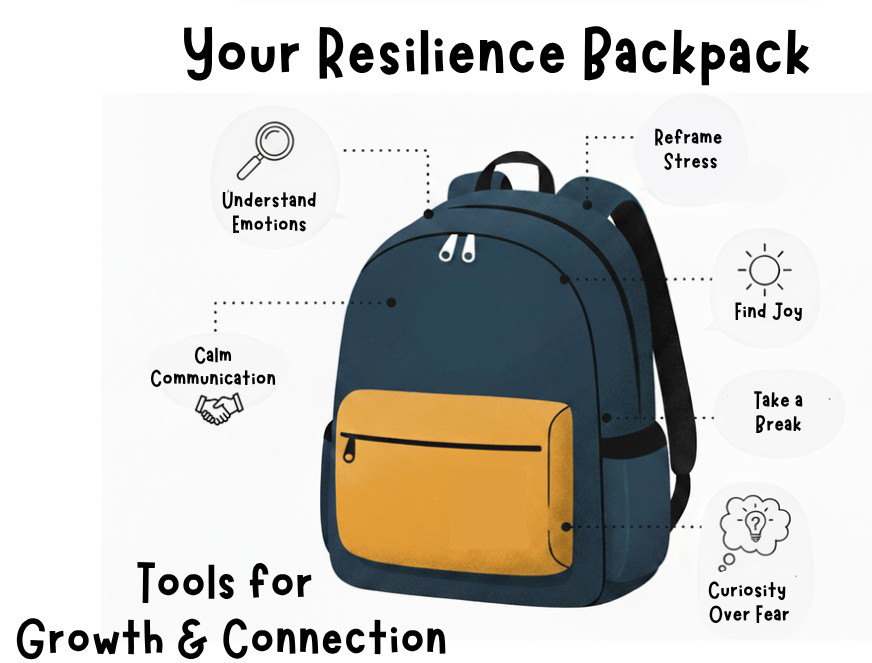
Table of Contents
- Introduction to the Curriculum and Guide
- How the Curriculum Works
- What the Teacher's Guide Contains
- The 4 Priciples of Resilience Builders
- Worksheet Examples
1. Introduction to the Resilience Builders Curriculum
This guide is designed to introduce you to the four core principles of this curriculum. Each principle is supported by practical exercises to help you gain mastery over the material. The goal is to create a classroom where emotions are seen not as problems to be managed but as opportunities for growth and connection, so students can approach challenges with curiosity instead of fear.
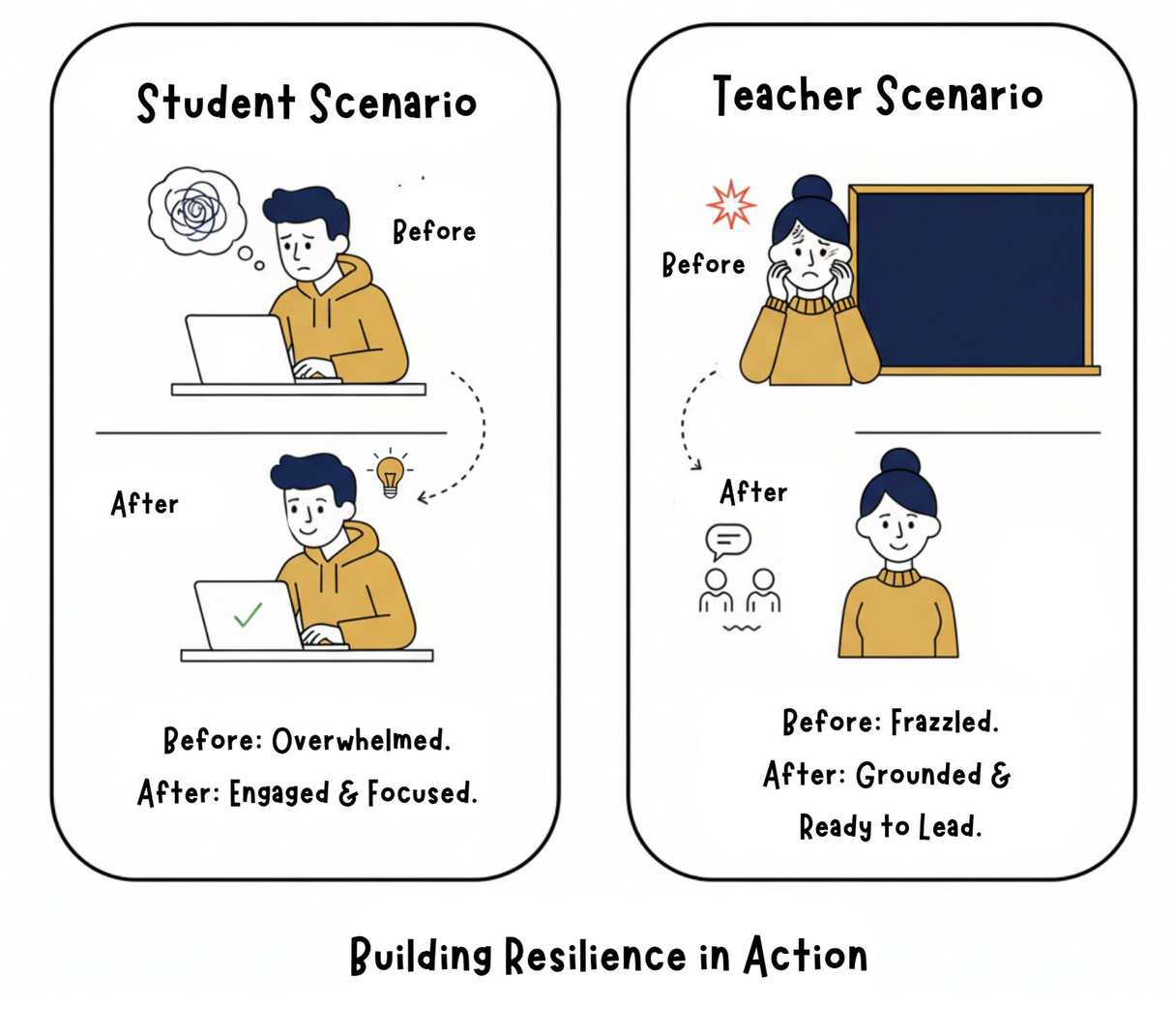
For example, if a student feels anger after a disagreement during group work, they can learn to identify it as a signal that a boundary was crossed and calmly communicate their needs. This reduces the likelihood of conflict escalating and fosters a more collaborative classroom environment. Similarly, when a teacher acknowledges their own frustration after a chaotic morning as a cue to pause and recalibrate, they model emotional regulation for the entire class.
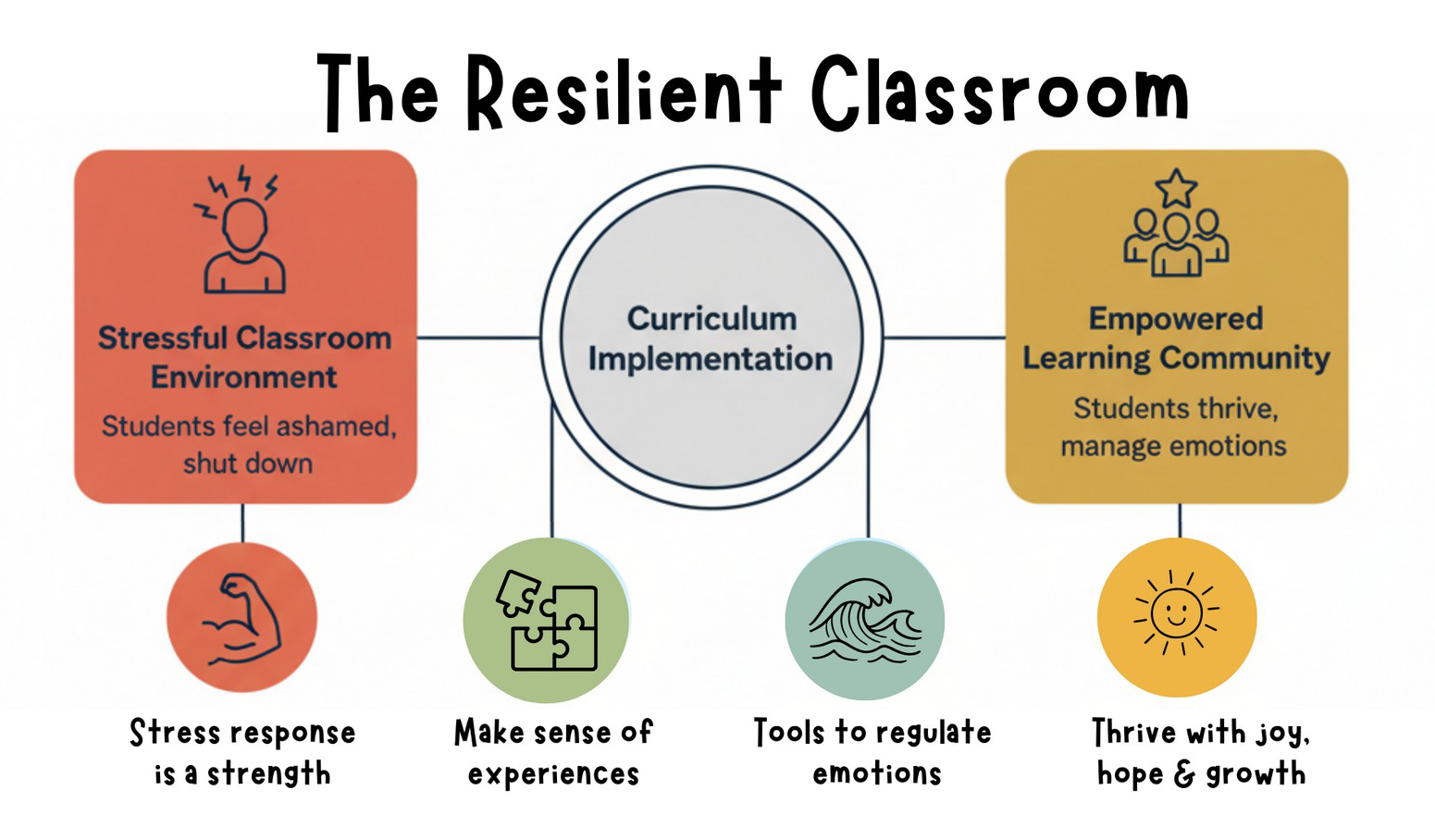
These principles also emphasize connection and resilience, which strengthen the entire classroom community. By reframing emotions and the stress response as strengths, students can feel empowered rather than ashamed of their experiences, leading to greater self-confidence and participation.
Together, these principles create an environment where everyone - students and teachers alike - feels equipped to handle emotions, connect meaningfully, and thrive in the learning process.
The core message of this curriculum is this: stress is a strength response, not a sign of weakness or disorder. By reframing stress and integrating tools for emotional regulation, storytelling, and cultivating joy, we can foster resilience and empowerment in ourselves and our students.
Wait. Why build a curriculum around stress? Isn’t stress something we’re all trying to avoid?
The reality is that stress is not something we can avoid. Life is full of challenges, losses, and overwhelming experiences, and while we can and should work to create safer, more supportive environments, we cannot protect students - or ourselves - from every difficult experience. What we can do is equip students with the tools to navigate those experiences with resilience, understanding, and self-compassion.
This curriculum does not center stress for its own sake; instead, it reframes our understanding of the stress response as adaptive, protective, and deeply human.
By teaching students (and educators) how to recognize emotions, respond to stress, and regulate their nervous systems, we create a foundation for healthier responses to life’s inevitable challenges. The result is not just better tools for processing stress when it happens, but a stronger ability to manage everyday stress, build meaningful relationships, and cultivate joy. By addressing stress directly - rather than avoiding it - we empower students to face life’s difficulties with confidence and resilience, ultimately reducing the long-term impact of stress and adversity.
2. How the Curriculum Works
This curriculum is designed to meet students and educators where they are, making it suitable for learners at any developmental stage. While activities are tailored to the group—from simple activities for young children to reflective discussions for high schoolers—the core principles remain the same: emotions are biological events, they serve a purpose, and they can be managed in empowering ways. This allows the curriculum to be introduced at any point in a student’s journey.
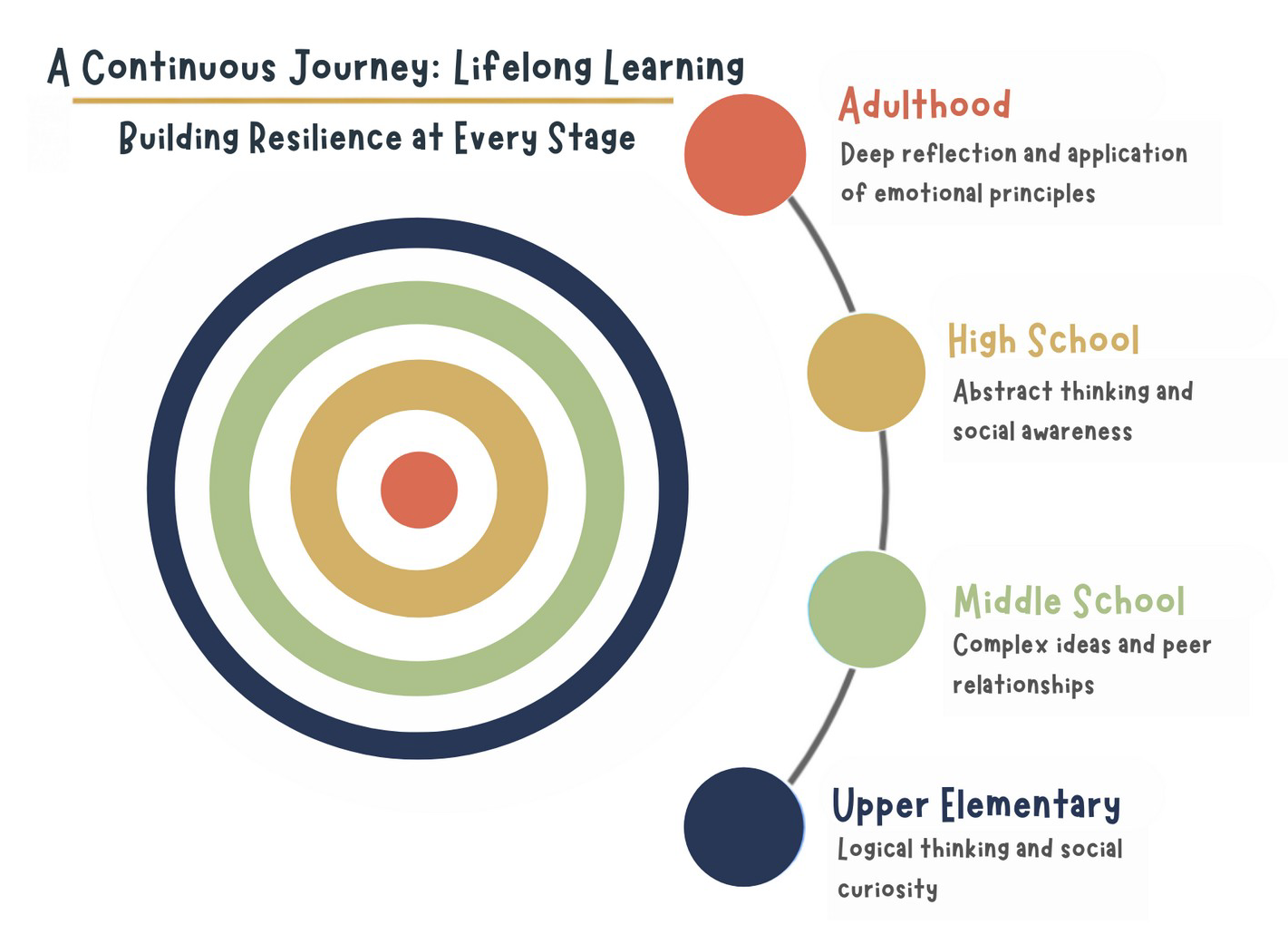
In addition to being accessible at any starting point, designed to grow with learners for continuous use. As students mature, the exercises evolve in complexity (e.g., middle school role-playing vs. adult reflection) even as the principles stay consistent. This progression allows students to revisit the material, deepening their skills at every stage. It is not a one-time experience but a resource for lifelong emotional resilience and growth.
3. What the Guide Contains
This guide provides explanations, examples, and exercises to help you understand and apply these principles. Exploring this material isn't just for teaching students; it's also for enhancing your own emotional well-being and creating a more resilient classroom. Modeling these principles makes the lessons more impactful.
What follows is an outline of each principle with a sample exercise to give you a foundational understanding. These exercises are starting points you can adapt. As you move through the guide, you’ll have the chance to think about how these ideas resonate with you and how they might be tailored to fit the unique needs of your classroom.
Reflect on how these concepts align with your teaching philosophy and students, and consider how to adapt the exercises for different contexts. This process is about empowering you to teach with confidence and creativity, not about following a rigid script.
Don't worry—each age-bracketed curriculum already contains content and sample exercises you can use immediately. You still have the freedom to adapt as you see fit; you are the expert on your classroom.
4. The Four Principles
Before diving into the four core principles, it’s important to understand the foundation of this curriculum. Throughout this guide, you’ll see a consistent philosophy: emotions are natural biological events, stress is an adaptive strength response, resilience can be cultivated through understanding and practice, and joy and connection are essential to long-term well-being. The four principles that follow build on this foundation.
Principle 1: STRENGTHEN
The stress response (fight/flight/freeze) is a strength response, not a sign of weakness or disorder. If we understand that our emotions and stress symptoms come from an adaptive and positive place within our biology, we can destigmatize these sometimes-overwhelming experiences and drop the shame when symptoms come up.
Principle 2: INTEGRATE
Because of the way that human psychology is structured, our experiences always need to be integrated in order for us to move on. That’s true for positive and neutral experiences, but it’s especially true for our negative experiences. If we can understand how our brains file experiences away, we can also become empowered to get help when we get stuck.
Principle 3: REGULATE
Our nervous systems have automatic responses, but that doesn’t mean we have zero control over these responses. Once we learn how they work, we become empowered to intervene and change our felt experience in the moment – whether we are facing a current stressful experience or a memory of one.
Principle 4: THRIVE
Current neuroscience proves that joy and hope are regulating emotions. They both have the power to extinguish fear and anxiety and when we practice engaging with these emotions over time, we can effectively rewire the brain and recalibrate the nervous system for safety and connection. Once we know this, we can become empowered to work these into our daily lives.
5. See the Curriculum in Action
Our program provides more than just theory – it provides a toolkit. Each lesson includes professional, evidence-based worksheets designed to help students build resilience, regulate their nervous systems, and navigate social complexities with confidence.
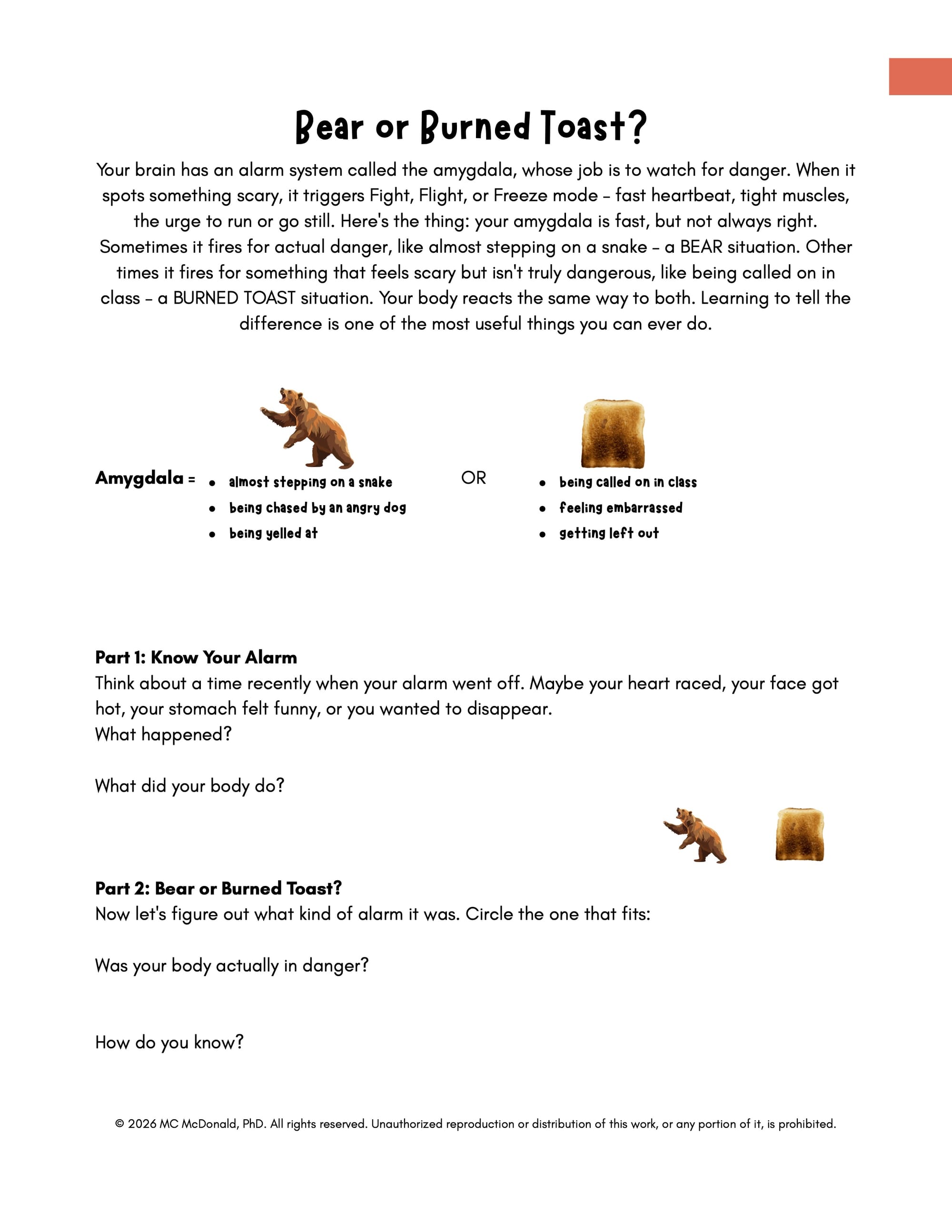
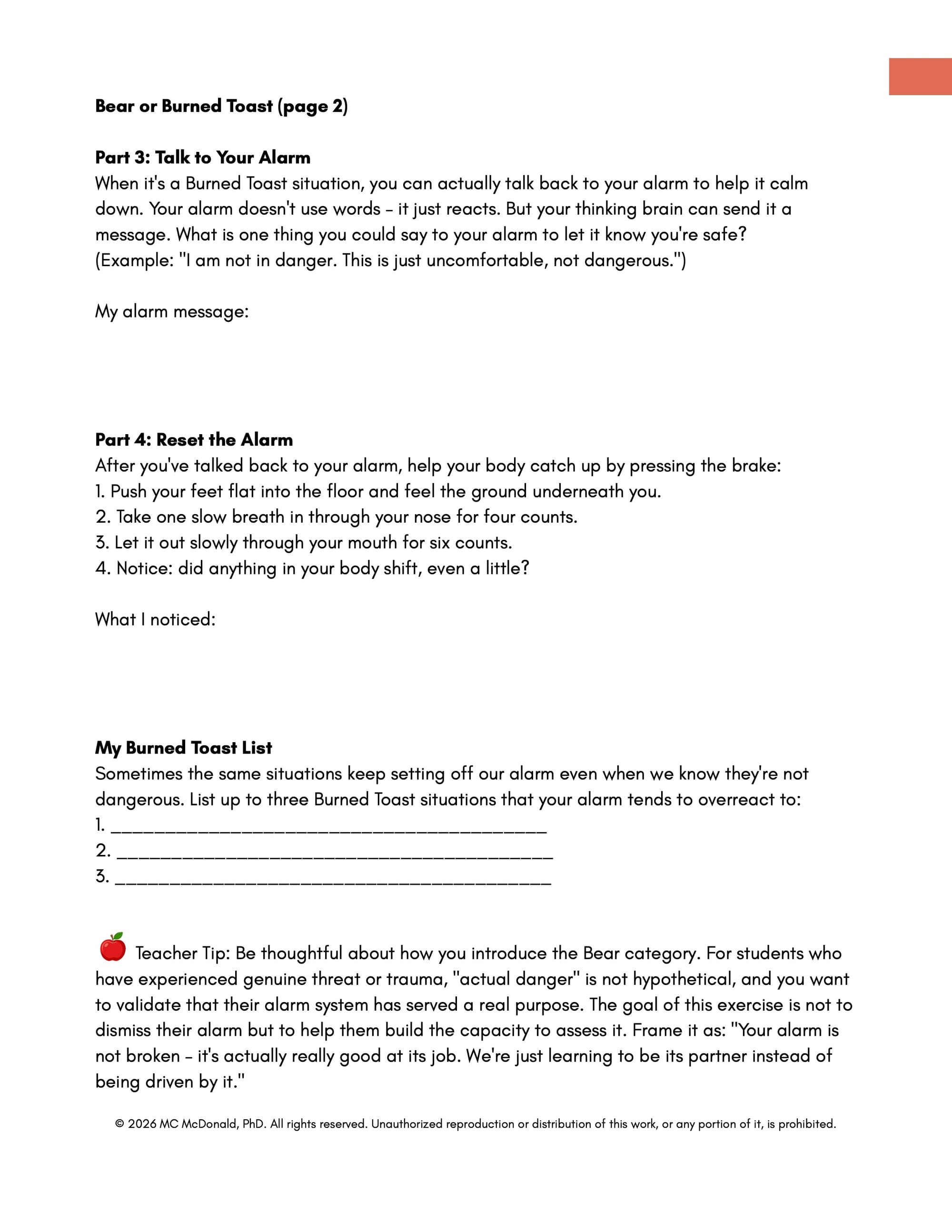
Learn how to help your child identify when their 'alarm system' is truly protecting them—and when it's just reacting to 'burned toast' moments. Get full access to our step-by-step emotional regulation tools.
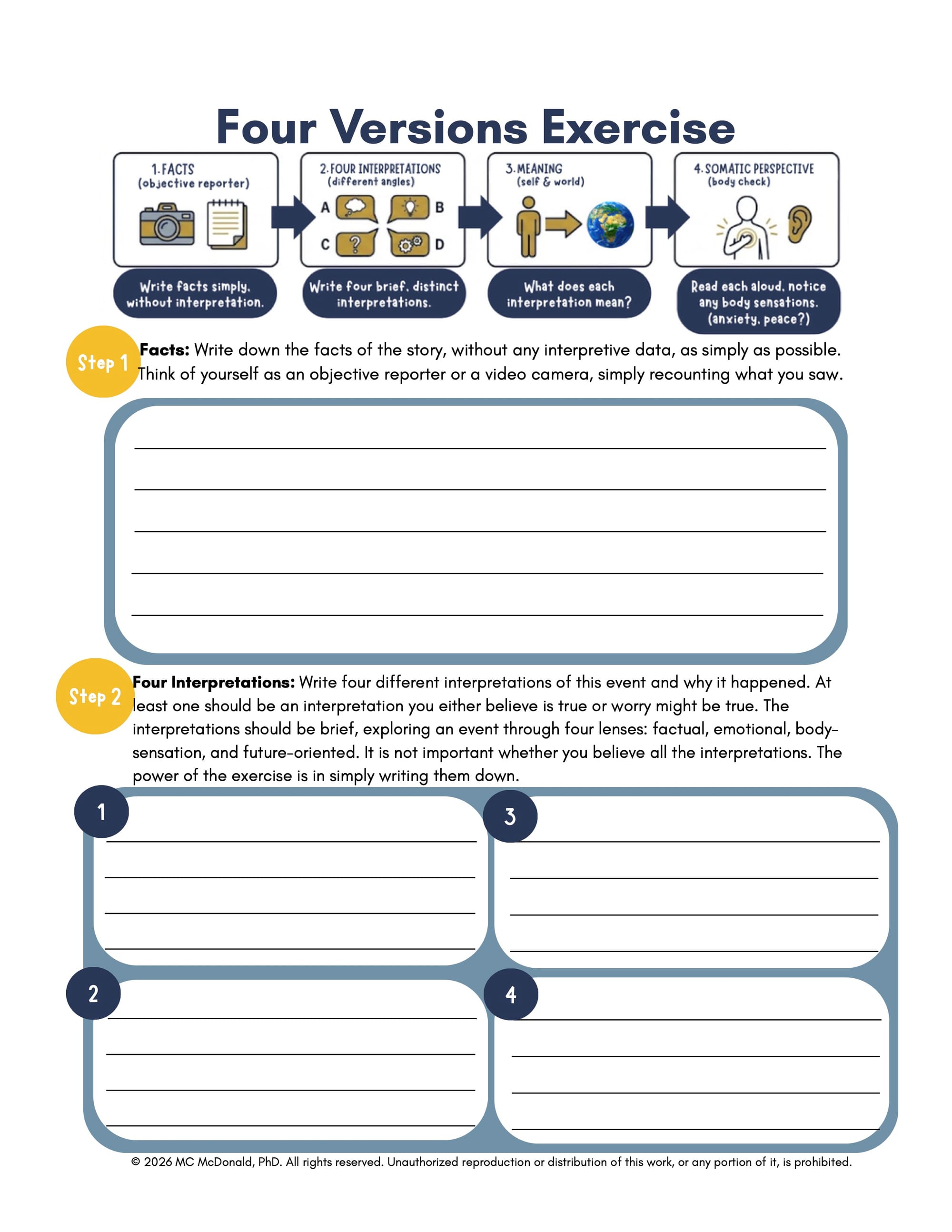
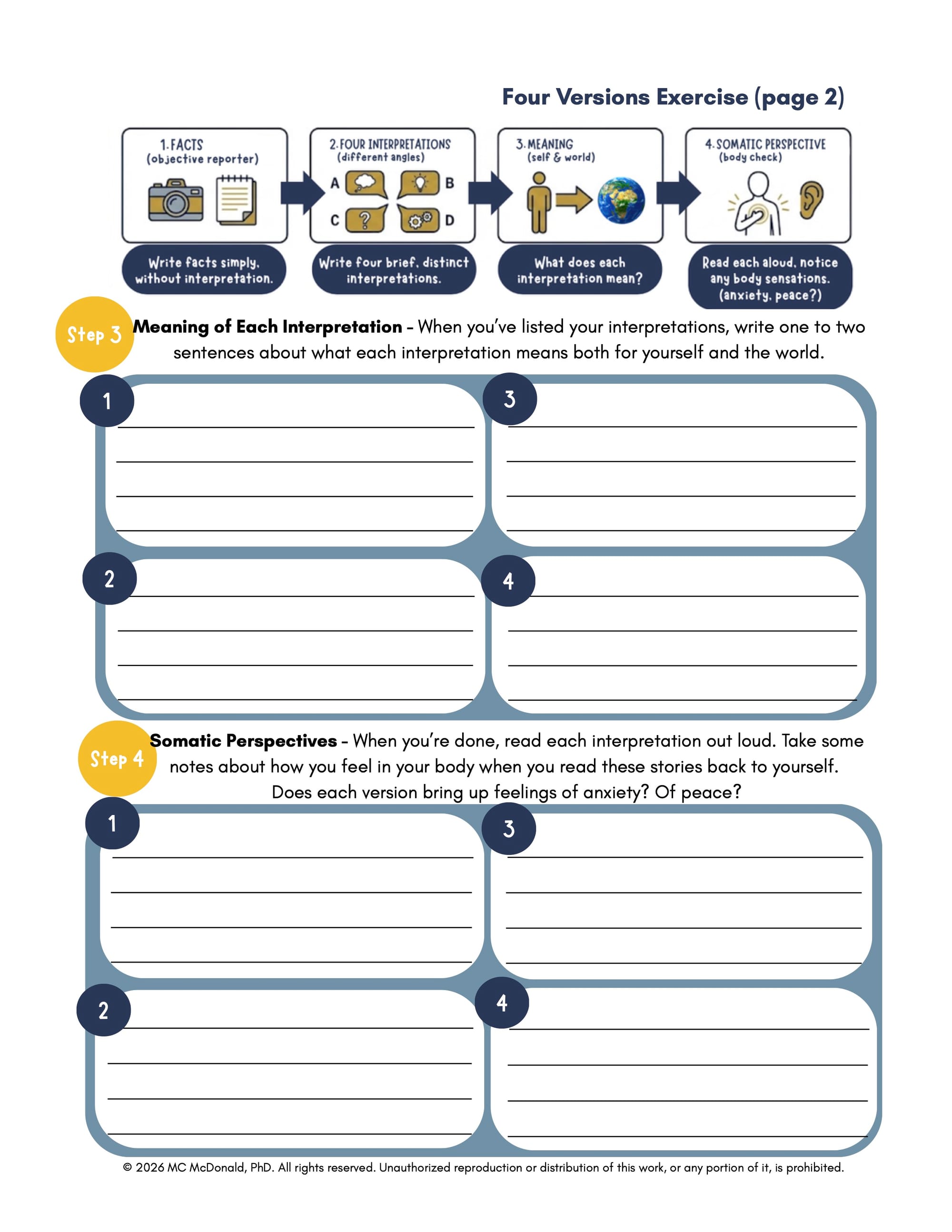
Move beyond assumptions. Our 'Four Versions' exercise gives students the framework to navigate social dynamics, rumors, and conflict with calm, objective clarity.
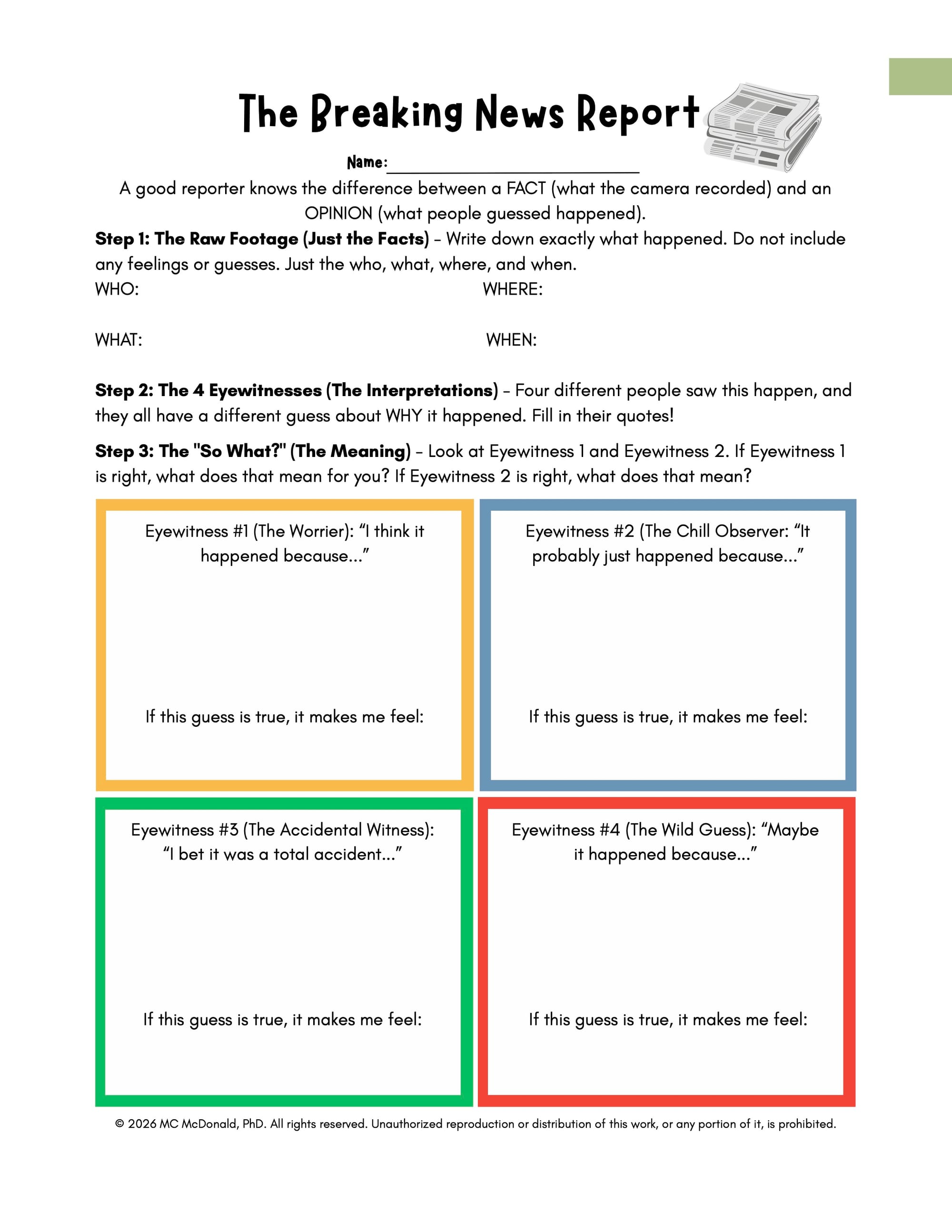
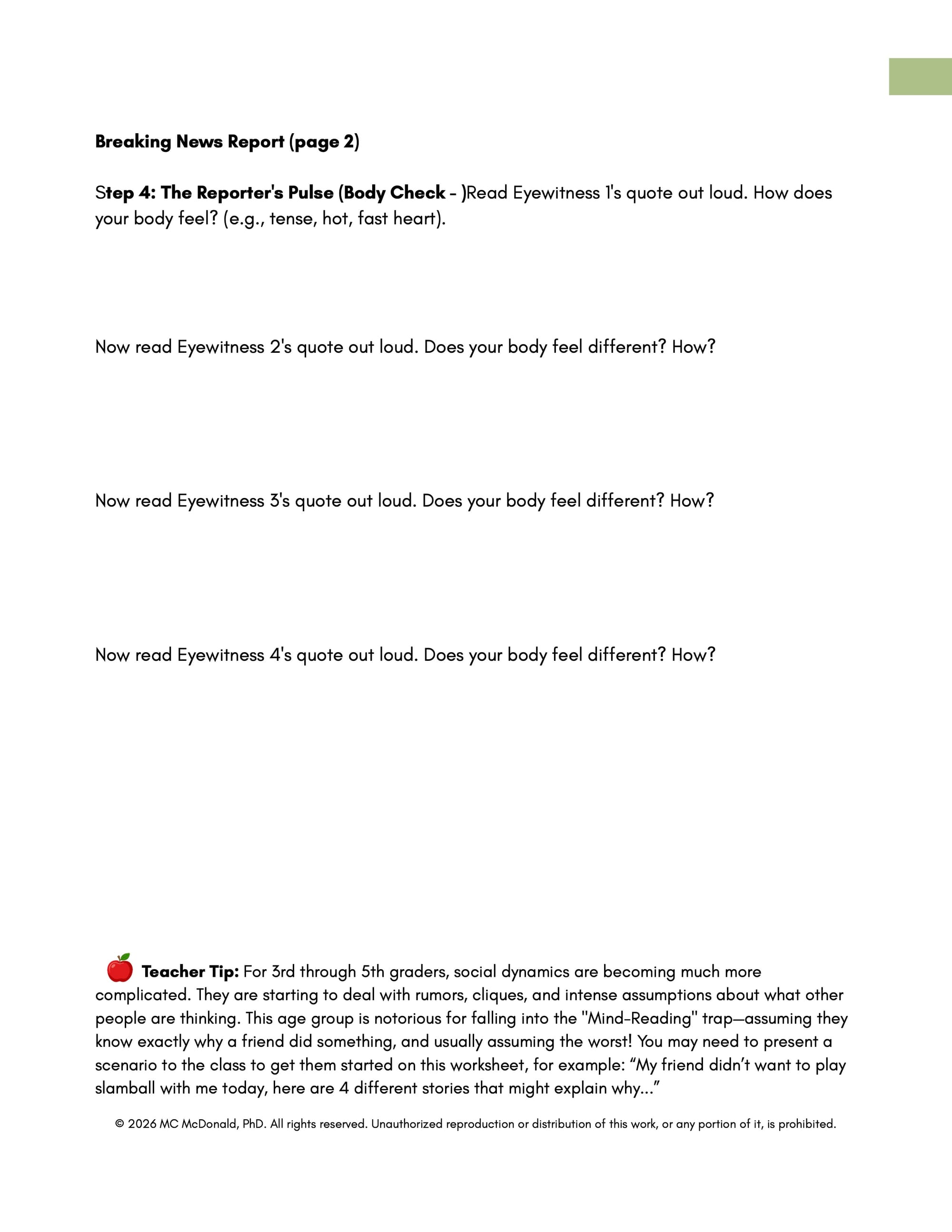
Stop the rumor mill before it starts. Our 'Breaking News Report' teaches children how to separate cold, hard facts from emotional guesswork, helping them navigate complex social dynamics with the clarity of a professional reporter.
Join Us
Find the right level of support for your classroom or school. Explore our community resources, full curriculum access, and district licensing options below.
Join the Resilience Community (Free!)
Get monthly insights on nervous system regulation, classroom-tested strategies, and exclusive free printables delivered straight to your inbox. Let’s build more resilient classrooms, together.
Ready to bring Resilience Builders to your classroom?
Gain instant access to the full curriculum, including age-bracketed lesson plans, guided worksheets, and activity packs designed to grow with your students from K through 12.
Empower Your Entire School or District
Looking to implement Resilience Builders across a department, school, or district? We offer tailored licensing, bulk access, and professional development support to ensure your team feels confident and equipped.